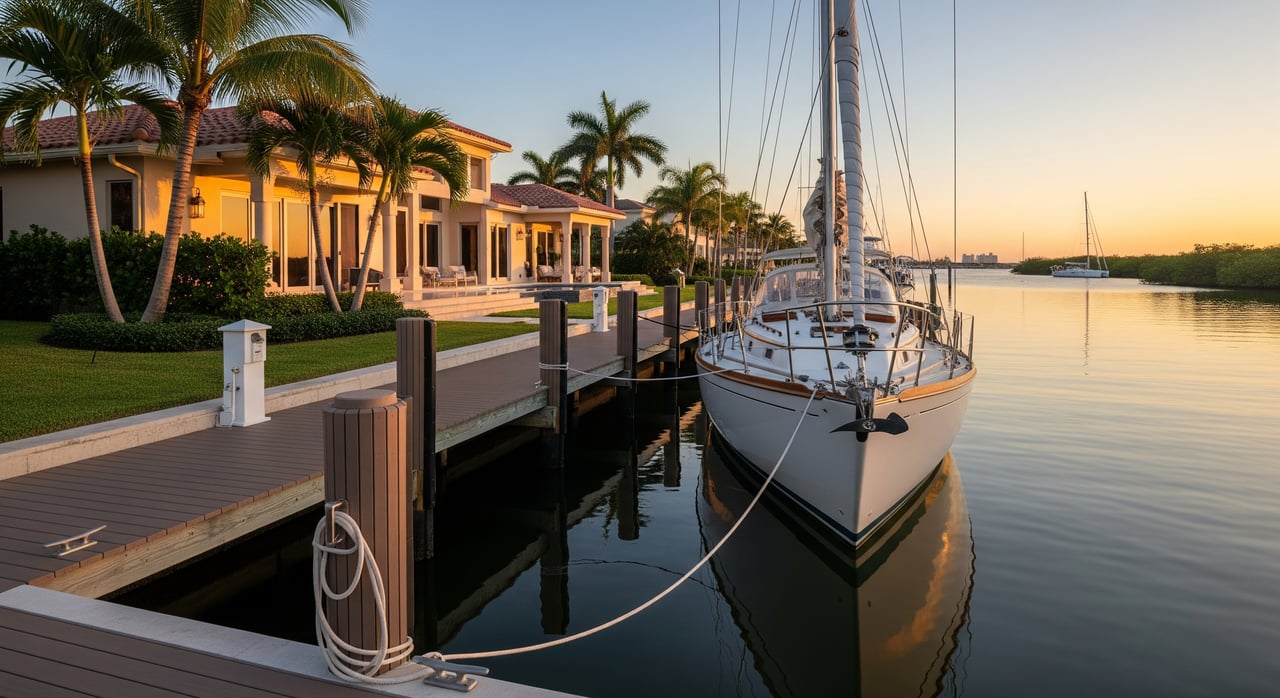
Understanding Sailboat Access for Punta Gorda Canal Homes
December 4, 2025
December 4, 2025
Shopping for a canal home in Punta Gorda and seeing “sailboat access” in the listing? It sounds simple, but it is more than a buzzword. If you plan to keep a sailboat at your dock, you need to know whether the route to open water fits your mast height and your boat’s draft. This guide breaks down what sailboat access means here, how to verify it for your boat, and the steps to take before you make an offer. Let’s dive in.
When a Punta Gorda listing says “sailboat access,” it generally means you can reach open water without lowering a mast and without encountering low fixed bridges. It also suggests there is enough depth and channel width for your boat. The key is to compare the route against your exact vessel dimensions.
You must clear both the sky above and the water below along your entire route.
Punta Gorda routes can include fixed high-span bridges, movable bridges, or low fixed bridges. Fixed bridges have a published vertical clearance referenced to a tidal datum. If the clearance is higher than your air draft, you can pass. Movable bridges can open to give you more clearance, but they operate on schedules and procedures. Low fixed bridges can block many sailboats.
Clearance numbers are tied to tides. Always compare bridge clearance at the published datum to your air draft and build in a safety margin.
Charted depths guide what draft can pass, but shoaling and seasonal changes can reduce depth between surveys. Narrow spots can be challenging for wider beams. Treat a chart as a starting point and confirm conditions before you rely on them.
Punta Gorda sits on Charlotte Harbor with multiple routes to the Gulf via nearby passes. Many homes are on canals that connect to the harbor, while some are directly on the harborfront.
Areas such as Punta Gorda Isles, the Fishermen’s Village area, and Burnt Store corridors can have different bridge, channel, and no-wake conditions. Listings sometimes say “no fixed bridges” or “minutes to open water.” Use that as a prompt to check the specific route, not as a guarantee for every sailboat.
Here is a step-by-step method that works for any Punta Gorda canal property.
Gather the exact air draft, draft, and beam for the boat you plan to keep at the property. Without these, “sailboat access” is only a label.
Use an authoritative nautical chart or a marine charting app to trace the path from the dock to Charlotte Harbor and onward to the Gulf. Note every bridge, narrow channel, and any shoal areas along the way.
Identify the type of each bridge and the published vertical clearance, along with the tidal datum used. For movable bridges, look up opening schedules and procedures. Compare the clearance to your boat’s air draft and add a safety buffer.
Compare charted depths to your boat’s draft plus a margin of 1 to 2 feet, adjusted for local conditions. Shoaling can change depths between surveys, so check recent notices to mariners or ask local marinas about current hot spots.
Measure nautical miles from the dock to the harbor channel or pass you plan to use. Divide by your cruising speed to get a baseline, then add time for no-wake zones, bridge openings, tides and current, and typical harbor traffic. Listings often assume ideal planing speeds that you may not achieve in canal and harbor segments.
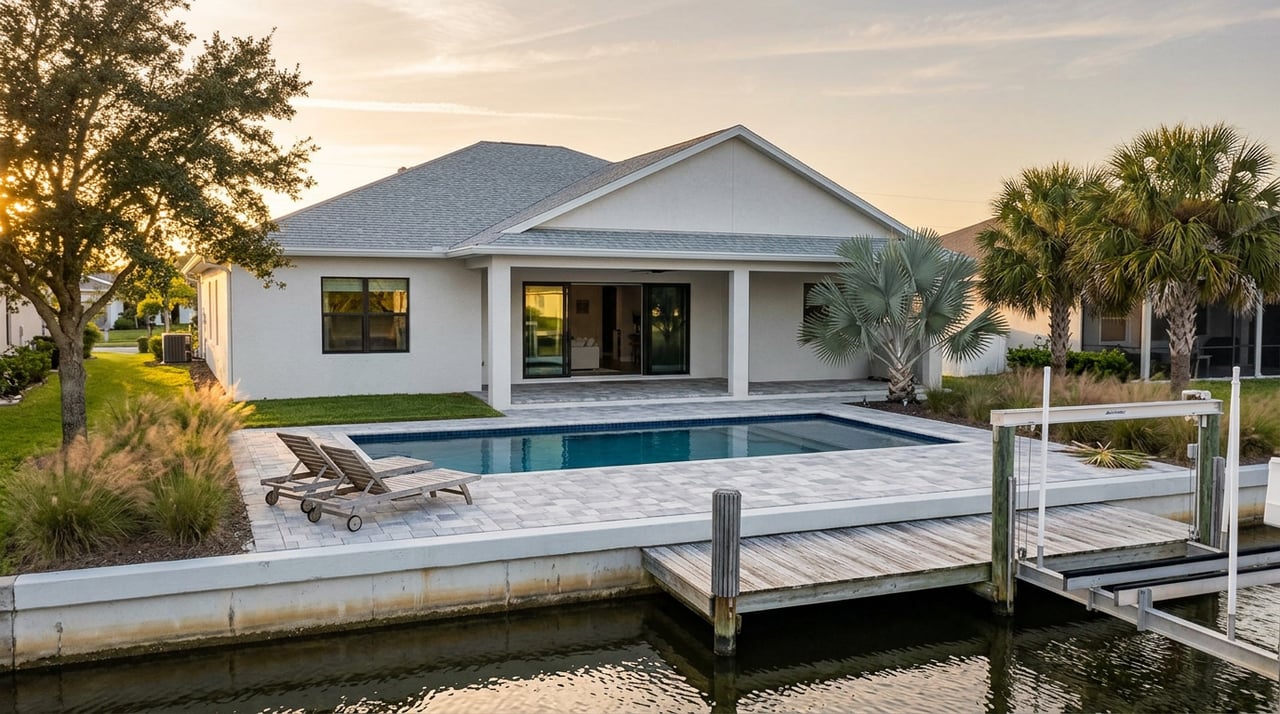
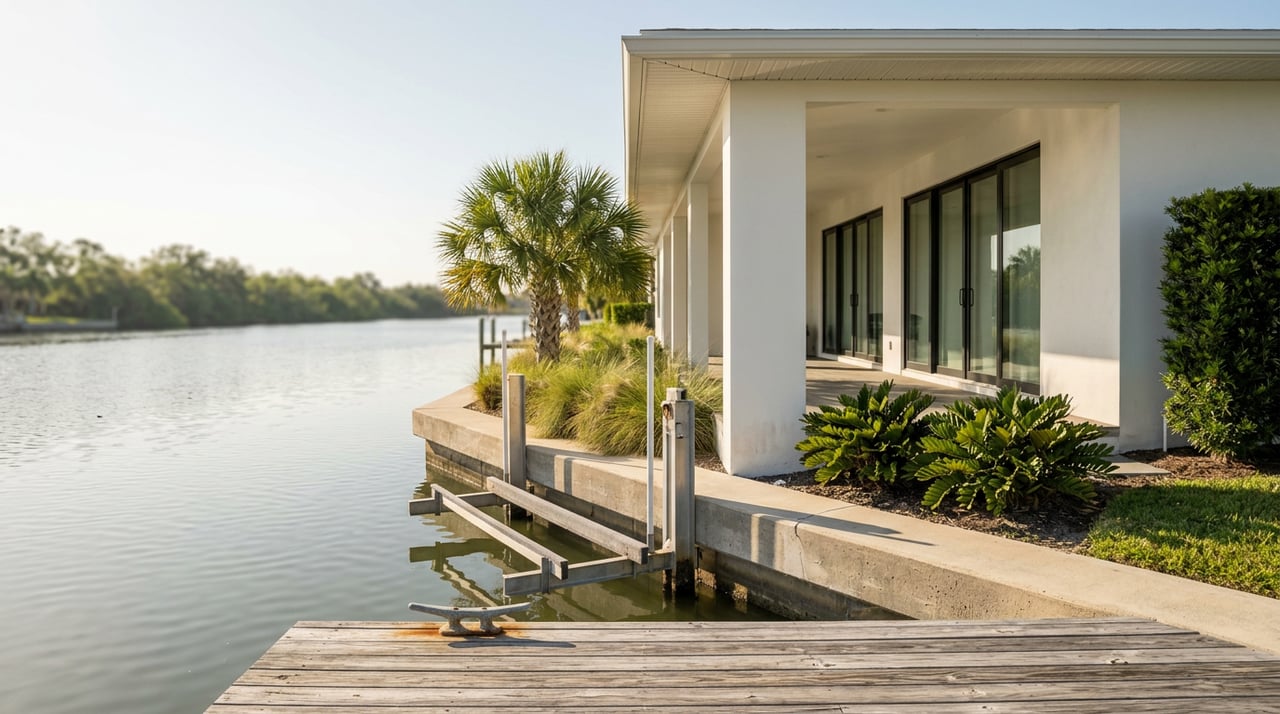
Confirm the dock type, lift capacity and lift height, shore power, water, and the condition of the seawall or bulkhead. Verify that any dock, lift, or seawall work was properly permitted, and review any neighborhood or association rules that could affect your use.
“Sailboat access” is a useful shorthand, but your boat and your route are what matter. If you confirm bridge clearances, depths, and local rules before you buy, you can enjoy the waterfront lifestyle without surprises. If you want help matching a property to your boat and your cruising plans, our local guidance makes the process simple.
Ready to find the right canal or harborfront home for your boat and your life in Punta Gorda? Connect with Team GYFL to get a clear plan and a curated search.
Have a Florida home you want to sell? Work with someone who knows what buyers look for and markets directly to them.
2200 Kings Hwy, 3L PMB A1007 Port Charlotte, FL, 33980