What to Know About Building on a South Gulf Cove Lot
May 21, 2026
May 21, 2026
If you have ever spotted an affordable lot in South Gulf Cove and thought, we could just buy it and build later, you are not alone. Vacant land here can look straightforward at first glance, especially in a community known for canals, boating access, and new construction. The reality is that one lot can be easy to build on while the next comes with extra steps, costs, or timing issues. This guide will help you understand what to check before you buy so you can move forward with more confidence. Let’s dive in.
In South Gulf Cove, your first step is not picking house plans. It is confirming the parcel’s exact section and association status.
That matters because South Gulf Cove has different HOA setups depending on the section. According to the South Gulf Cove HOA, membership is voluntary in sections PCH 058, 071, 078, 081, 082, 085, 087, and 093, while section 094 is under a separate mandatory Waterview Property Owners Association.
Even if membership is voluntary, deed restrictions still apply. The HOA also states that ARC approval is required before starting a new home, garage, fence, paint project, or other improvements.
The current HOA membership page lists dues at $120 per year. That is one piece of the ownership cost, but it is not the full picture.
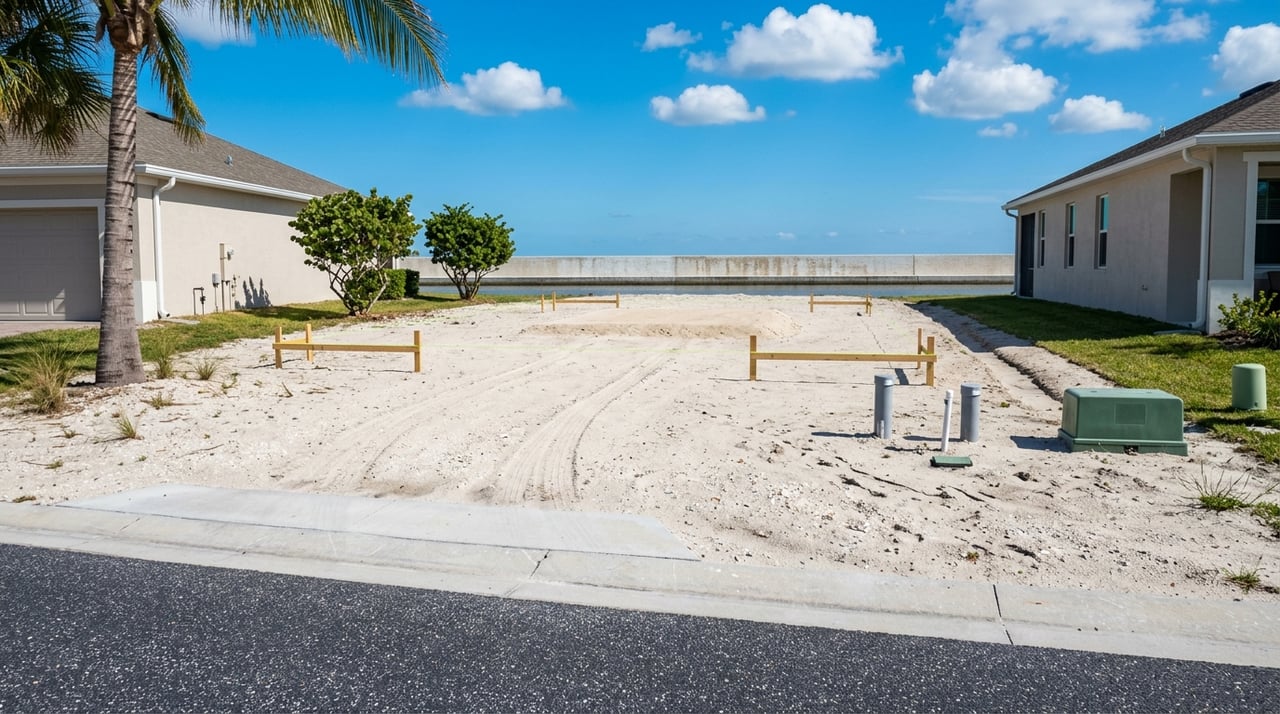
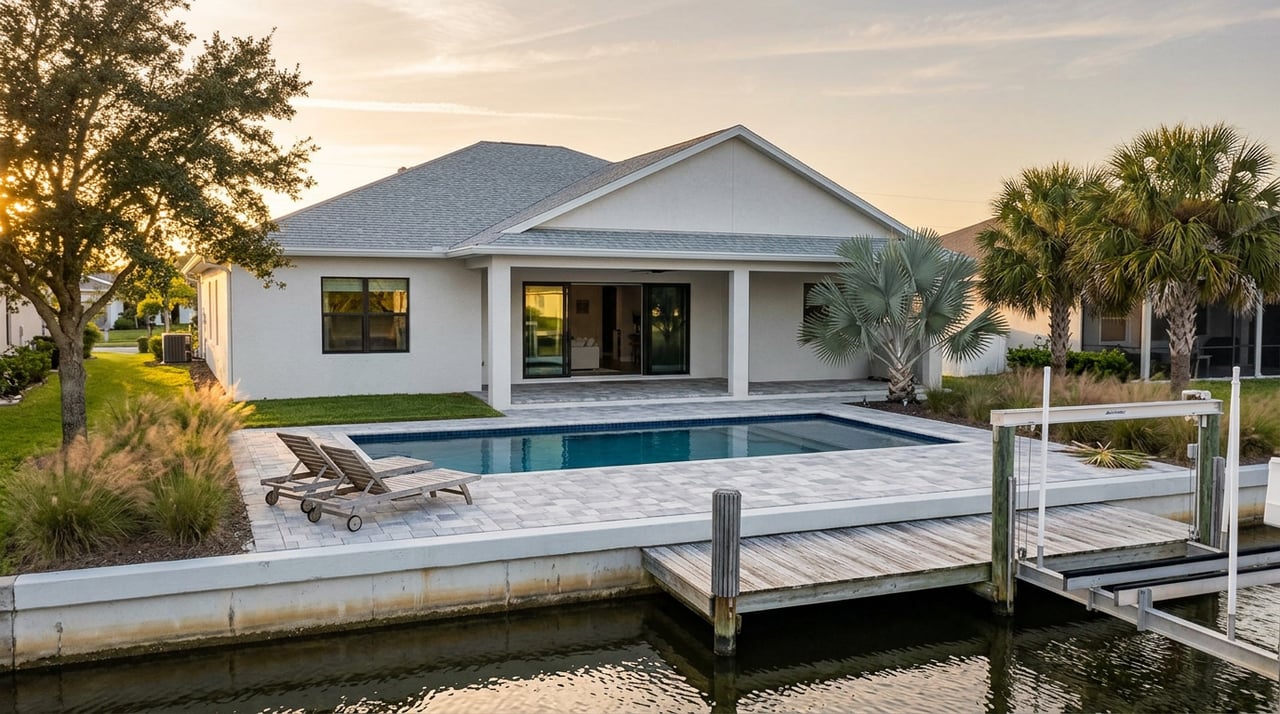
South Gulf Cove includes both waterfront and dry lots. Charlotte County describes the community as a single-family residential area with canal lots and non-canal lots.
A waterfront lot has canal access. A dry lot does not have direct canal access.
That sounds simple, but it affects how you use the property and how future buyers may see it. In a boating-oriented community like South Gulf Cove, the lot’s water access can shape day-to-day lifestyle and long-term appeal.
Before you close on a vacant lot, confirm utility availability through Charlotte County’s Utilities Availability Form. The county says you should submit one lot per form, and the street address and short legal description must match.
This step is too important to leave for later. A lot may be in a community served by county water and sewer, but timing and connection requirements still matter.
Charlotte County says that if sewer is considered available under county code, the owner is legally required to pay the connection fees. If water service already exists at the property, the county can set up the account after closing.
For new service adjacent to an existing line, installation may take two to three months. The county also says that once water connection fees are paid, meter setting and stub-out can take up to 90 days.
If the property falls under a mandatory connection, the county gives 365 days for water and 180 days for sewer to pay fees and connect. That means your build timeline and your carrying costs can start shifting sooner than many buyers expect.
Flood and buildability should be early due diligence items, not last-minute surprises. Charlotte County says new construction in flood zones must meet current floodplain standards.
The county’s permit process can include flood-load review and, when applicable, a No Impact Certification. These are not minor details because they can influence design, elevation, and construction planning.
If you are trying to evaluate a lot before buying, Charlotte County also notes that elevation certificates do not exist for vacant lots. For buildability questions, the county says the Zoning Division can help determine whether a lot is buildable or nonconforming.
Some buyers want to improve a lot first and build later. In South Gulf Cove, there is some flexibility, but there are also clear limits.
Charlotte County says you may install a seawall, dock, and fence on a residential vacant lot before building the main home. That can be helpful if you are planning in phases.
At the same time, the county says you cannot store items on the lot. You also cannot live there in an RV or temporary structure until the home is complete and a certificate of occupancy has been issued.
Building on a vacant lot in South Gulf Cove is usually a sequence, not a one-step event. The smoothest projects tend to start with clear lot research and realistic timing.
A practical order looks like this:
This process reflects both the HOA ARC requirements and Charlotte County’s permit structure. If you are relocating or buying from out of state, it is especially helpful to think of the lot purchase and the home build as connected, but separate, decisions.
For a new single-family home, Charlotte County requires signed and sealed plans. If the contract is over $5,000, the county also requires a notice of commencement.
You will also need utility documentation showing Charlotte County Utilities service or septic approval. County review can include utilities, zoning, right-of-way, tree, and natural-resources review.
The county’s permit fee structure also includes impact fee payment before final inspection. That is another reason to build a full budget early rather than focus only on the lot price and builder quote.
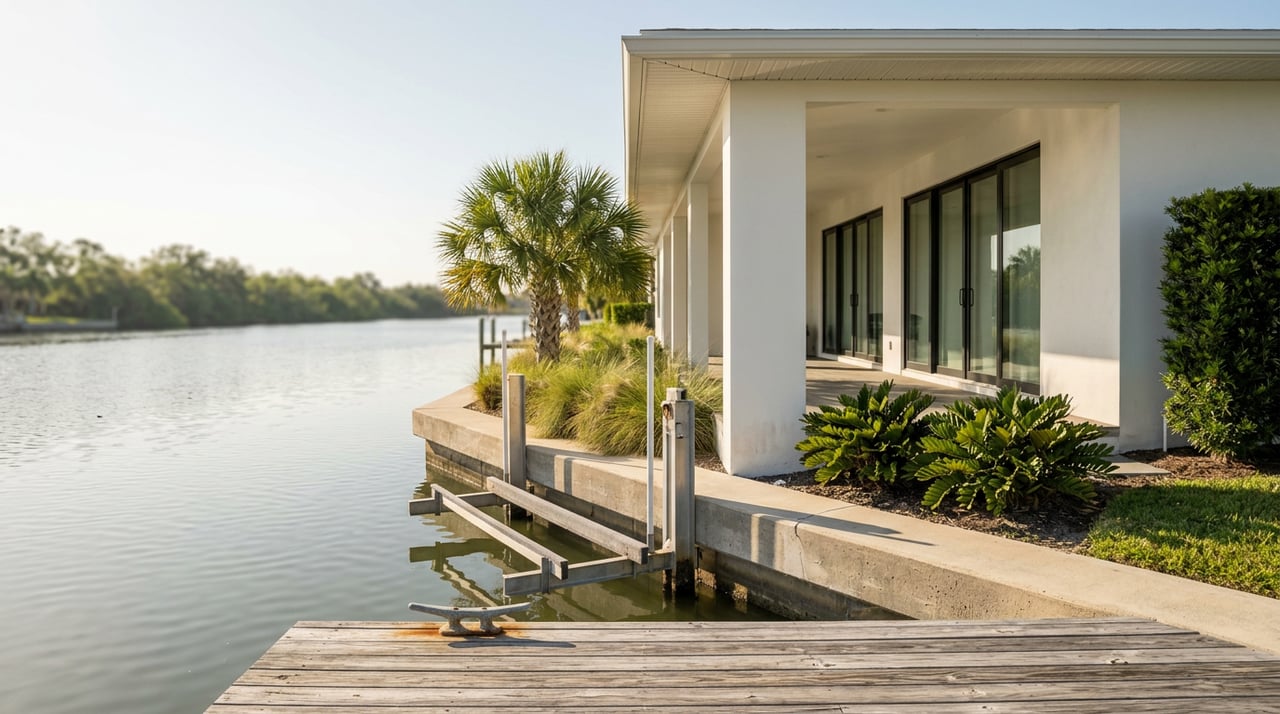
On waterfront lots, the seawall can be one of the biggest practical variables. If the lot needs a seawall, Charlotte County requires a separate seawall permit with signed and sealed plans, a site plan, and a survey.
Depending on the work, approval may also be needed from the Florida Department of Environmental Protection or the U.S. Army Corps of Engineers. That can add time and coordination.
Charlotte County lists eligible licenses for this work, including certified marine, certified general, certified residential, registered building, and registered residential contractors. If you are comparing lots, the presence, condition, or absence of a seawall deserves careful attention.
Some buyers consider acting as their own builder to save money or keep control of the project. Charlotte County does allow owner-builder permits for home construction and marine work.
But there is an important rule to know. Under the county’s owner-builder rules, the property cannot be rented or sold within one year of completion.
That may not be a problem if you are building a long-term personal residence. Still, it is a major factor if you want flexibility to resell, rent, or change plans soon after construction.
South Gulf Cove’s appeal is closely tied to boating, but canal frontage alone does not tell the whole story. Charlotte County’s Waterway Benefit Unit helps fund periodic dredging, canal and lock repairs or replacement, lock operation, and cattail removal.
The county also says the existing lock has had recurring maintenance issues and is being supplemented by a parallel-lock project intended to improve and speed access in and out of the waterway system. County project pages also note reduced draft depths and potential navigation hazards after storm damage.
The takeaway is simple. Canal usability can change over time, so buyers should verify current conditions and not assume every waterfront lot offers the same boating experience.
A common mistake with vacant lots is underestimating carrying costs. In South Gulf Cove, ownership costs may include more than purchase price, permits, and voluntary HOA dues.
Charlotte County says the community has multiple MSBU units. The community plan states that assessments are levied on lots to fund street and drainage work, recurring road maintenance, and recurring waterway maintenance such as dredging and lock repairs.
That means lot ownership can come with ongoing assessment exposure even before construction begins. These costs can influence affordability now and resale appeal later.
If public boating access matters to you, verify it directly rather than relying on old information. Charlotte County’s current South Gulf Cove Park page says the public boat ramp remains closed.
That does not affect every buyer the same way, especially if you are planning private dock access. But it is an example of why South Gulf Cove buyers should check current county information instead of making assumptions based on marketing language or past conditions.
Most lot buyers will need more than just a builder. Based on county permit requirements, you should expect to involve a surveyor, a licensed builder or marine contractor, and often an engineer for signed and sealed plans.
You may also need to coordinate with the HOA ARC contact plus county utilities and zoning staff. If you are dealing with a larger assembled lot, the county FAQ says properties over one acre may require a current Protected Species Assessment, and wetland impacts can trigger additional permits.
This is one reason local guidance matters. The right team can help you spot issues before they become delays.
In South Gulf Cove, a vacant lot is not just a piece of land. It is a bundle of lot-specific details that affect whether, when, and how you can build.
The biggest items to review are usually:
If you are thinking about building in South Gulf Cove, the smartest move is to treat due diligence as part of the purchase, not something you figure out after closing. If you want help evaluating lots, understanding the community layout, or narrowing down options that fit your timeline and goals, Team GYFL is here to help.
Have a Florida home you want to sell? Work with someone who knows what buyers look for and markets directly to them.
2200 Kings Hwy, 3L PMB A1007 Port Charlotte, FL, 33980