Port Charlotte Waterfront vs Inland Homes: Key Tradeoffs
March 5, 2026
March 5, 2026
Thinking about buying in Port Charlotte and torn between a canal home and an inland address? You are not alone. Both options offer great Florida living, but the day-to-day experience, upkeep, and costs can be very different. In this guide, you will learn how waterfront access really works here, the insurance and permitting basics, what maintenance to expect, and a simple checklist to help you choose with confidence. Let’s dive in.
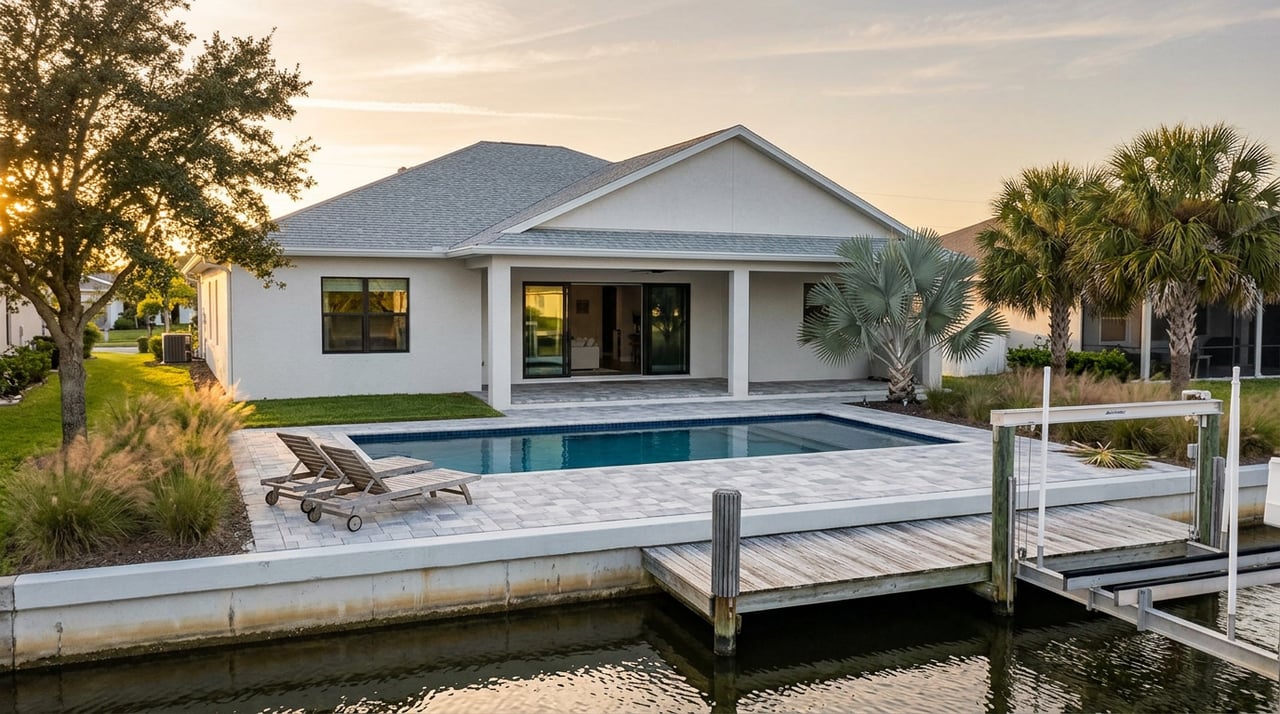
Much of Port Charlotte’s waterfront sits on canal networks that connect to Charlotte Harbor and the Gulf. In certain neighborhoods, like South Gulf Cove, canals are part of a county-managed system. The South Gulf Cove Waterway Benefit Unit handles the community lock and dredging schedules, and assessments help fund that work. You can review community details on the South Gulf Cove community pages and see how dredging and the lock are managed on the South Gulf Cove Waterway Benefit Unit page.
Why this matters to you: two canal streets a mile apart can have different fees, maintenance schedules, and boating access rules. Always confirm whether a specific parcel is inside a waterway benefit unit, what assessments apply, and how the canals are maintained.
Some canals include bridges or a community lock that set height limits for your boat and affect travel time to Charlotte Harbor. Bridge clearances and lock rules are published by the community and county. Ask your agent to verify the route from the dock to open water, including any fixed bridges, average water depths, and seasonal factors that may change clearance. The South Gulf Cove community site is a useful starting point.
If you choose an inland home but still want to get on the water, you can keep your boat at a marina or use public ramps. The Charlotte Harbor boat ramps map lists multiple public launch points across the area. This can be a smart compromise if you want boating without the cost and care of a private seawall and dock.
Charlotte County provides clear guidance on flood risk and the FEMA maps that lenders use. If a home is inside a Special Flood Hazard Area, typically a zone that starts with A or V, lenders for federally backed mortgages usually require flood insurance. Get the details and tools for elevation certificates from the Charlotte County flood information center.
What to do next: ask for the property’s elevation certificate, confirm the exact FEMA zone, and understand the base flood elevation. This helps you budget for coverage and compare options between waterfront and inland homes.
Florida’s insurance market changes over time, and pricing is address specific. Before you go under contract, request live quotes for homeowners, wind, and flood coverage. Use the Florida Office of Insurance Regulation market tools for background, then lean on local brokers for current, property-level numbers.
Waterfront improvements often involve more than one agency. Many small residential docks and seawall repairs are streamlined under Florida’s State Programmatic General Permit, a coordination between the state and the U.S. Army Corps of Engineers. Even with streamlining, projects must meet design and environmental criteria like seagrass and mangrove protection. You can read about the State Programmatic General Permit to understand the basics.
What this means for you:
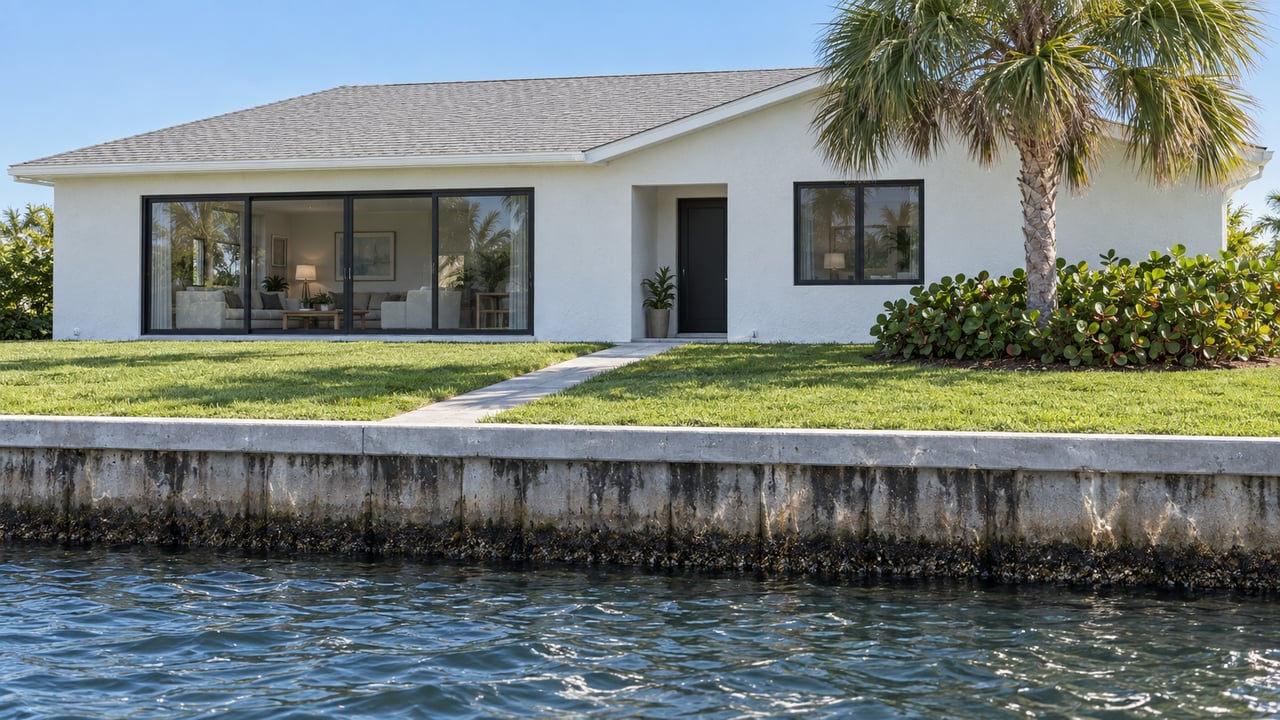
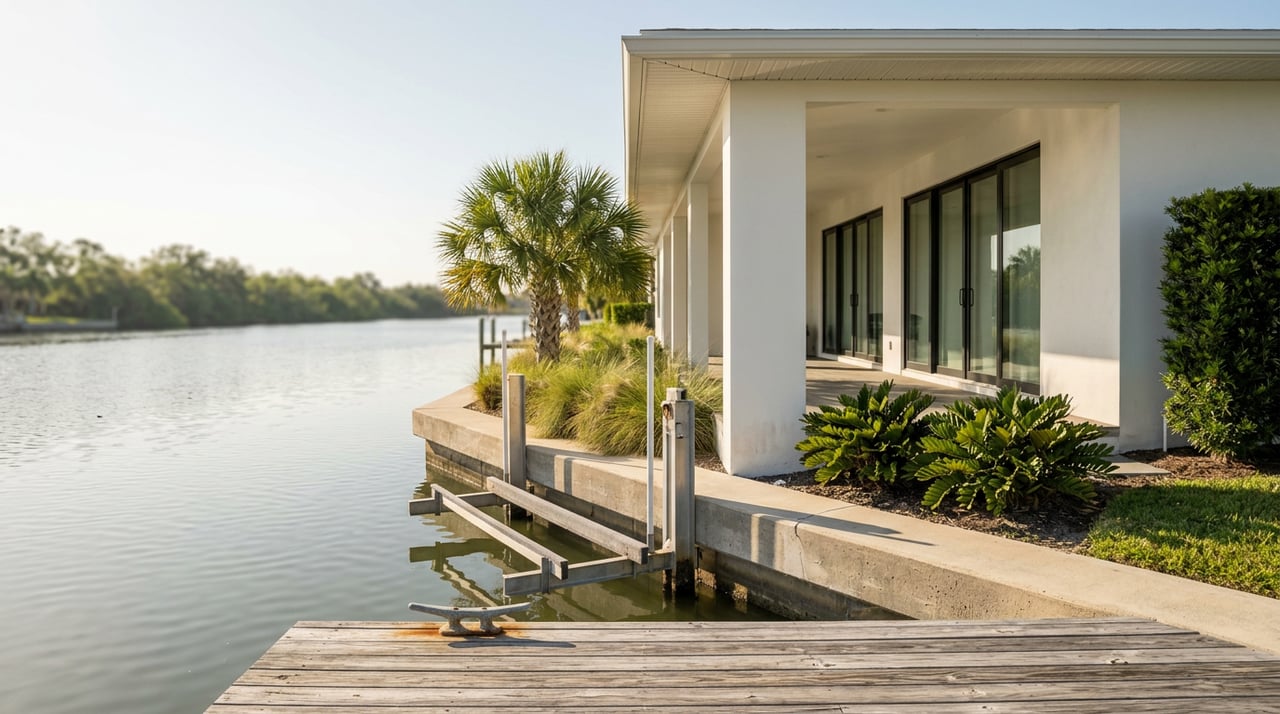
On canal lots, the seawall is a critical asset. Replacement and major repairs depend on wall length, materials, site access for equipment, and permitting needs. Instead of focusing on a single price, plan for an inspection and ask for the seawall’s age and repair history. For system-wide responsibilities and dredging schedules in South Gulf Cove, check the county’s Waterway Benefit Unit page.
Dock boards, pilings, and boat lifts need periodic service. Lifts may involve special insurance endorsements and clear storm plans. If you want to expand a dock or install a lift, expect to verify placement and design to meet state and federal rules.
Canal depth affects your boating season. Some neighborhoods run periodic maintenance dredging through the county, and those schedules influence navigation. Always ask whether recent dredging occurred and where your dock sits relative to the main channel.
Waterfront living pairs daily views with simple vacation routines. Many seasonal owners value the ability to host guests, enjoy a quick ride to Charlotte Harbor, and close up the home with a clear storm checklist. If you plan to rent your home seasonally, confirm short-term rental rules and find a reliable property manager. The South Gulf Cove community site is a good place to start understanding local expectations.
Many full-time buyers choose inland for its lower maintenance and often lower insurance exposure. If boating is still a priority, look for inland homes near public launch points. The Charlotte Harbor boat ramps map helps you plan a route that fits your weekend routine.
Waterfront homes with docks and lifts can draw strong vacation demand. Balance that upside with higher potential maintenance, flood and wind coverage needs, and MSBU assessments. Build those variables into your cash flow and reserve plan before you offer.
Use this checklist during due diligence so you do not miss the details that matter.
Choose waterfront if your perfect day starts with coffee on the lanai, a quick boat ride to Charlotte Harbor, and sunset views over the canal. You will accept a little more upkeep and planning for that lifestyle. Go inland if you prefer a simpler budget, fewer salt and storm variables, and the freedom to tow your boat to a ramp when you feel like it. In Port Charlotte, both options can be great choices. The best fit comes down to how you want to live and what you want to maintain.
Ready to compare homes, canals, and access routes by street, not just by neighborhood? Reach out to Team GYFL to get a clear, local plan for your move.
Have a Florida home you want to sell? Work with someone who knows what buyers look for and markets directly to them.
2200 Kings Hwy, 3L PMB A1007 Port Charlotte, FL, 33980